

Seven years ago, I chose sobriety. Not because I had to. Because I liked who I was better without substances clouding my judgment. This personal decision transformed my life positively, but it also created an unexpected challenge: navigating the alcohol-centric world of business networking.
If you’re sober in the business world, you know the struggle. Every conference has its cocktail hour. Every deal seems to close over drinks. Every team celebration centers around a bar. You want to advance your career, but you also want to stay true to your choice.
Here’s what I’ve learned about thriving professionally while staying sober.
The Reality of Business Drinking Culture
Business and alcohol have been intertwined for decades. The three-martini lunch might be history, but drinks remain the default social lubricant for professional relationships. This isn’t changing soon.
The challenge isn’t being around drinking. Most sober professionals handle that fine. The real issue emerges two hours into any event. The cognitive gap widens. Conversations become repetitive. Decision-making deteriorates. You’re operating at full capacity while others are increasingly impaired. The disconnect grows uncomfortable.
You leave early. You miss the late-night breakthrough conversations. You skip the after-party where real connections form. Over time, you feel excluded from the inner circle.
Strategies That Actually Work
Own Your Choice Without Apology
Your sobriety isn’t shameful. It’s a superpower. When asked about drinks, a simple “I don’t drink” suffices. No elaboration needed. Most professionals respect clarity and decisiveness. These are leadership qualities.
Arrive Early, Leave Strategic
The first hour of any networking event offers maximum value. People are sharp. Conversations have substance. Make your strongest connections early. When the cognitive gap becomes noticeable, you’ve already achieved your networking goals.
Become the Breakfast Meeting Champion
Propose coffee meetings. Suggest breakfast discussions. Schedule lunch presentations. You control the environment. You eliminate alcohol from the equation. You’re also respecting everyone’s time by meeting during productive hours.
Create Alternative Bonding Experiences
Organize activities that don’t center on drinking. Golf outings. Escape rooms. Volunteer events. Tech workshops. You become known as the person who creates memorable experiences, not the person who doesn’t drink.
Master the Art of the Mocktail
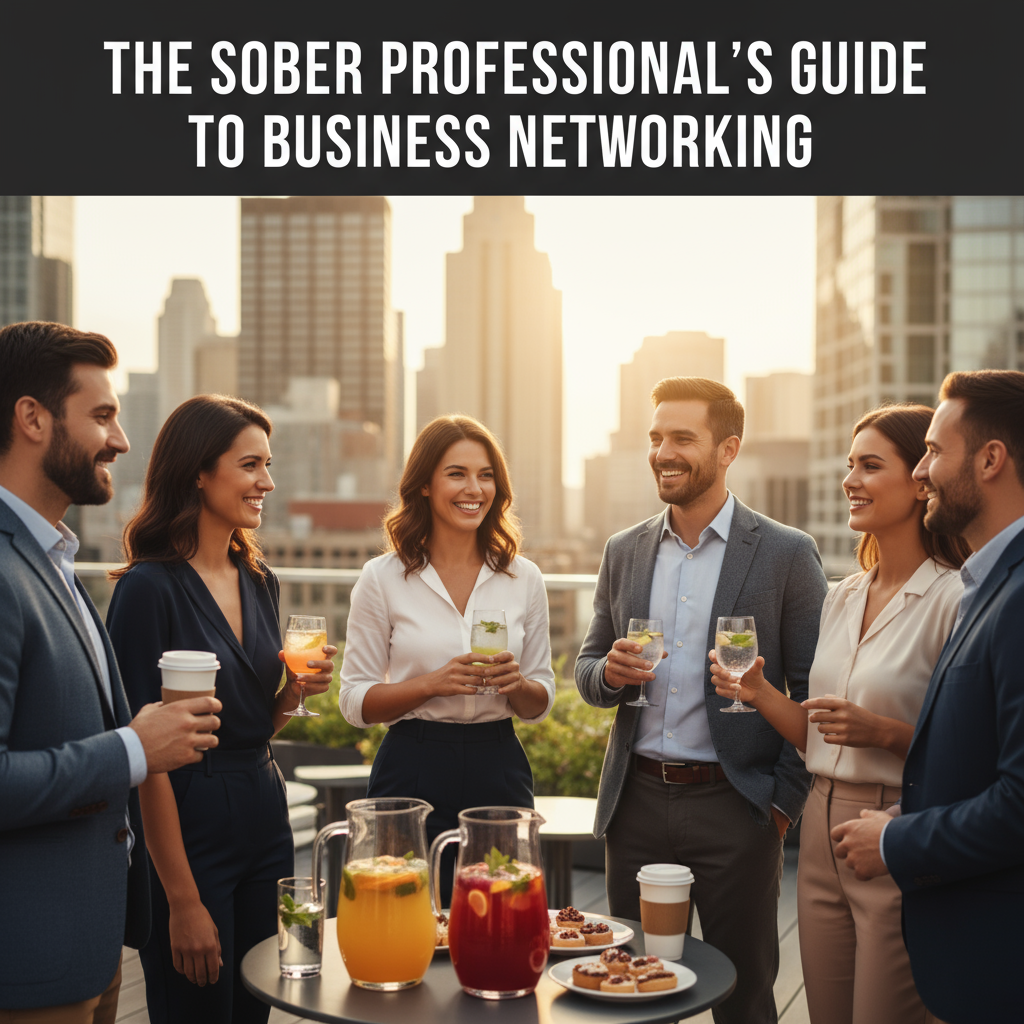
Hold a drink. Any drink. It stops the questions and makes others comfortable. Bartenders everywhere can make impressive non-alcoholic cocktails. Tip well. They’ll remember you and take care of you at future events.
Build Your Power Hour Strategy
Identify the key people you need to connect with. Approach them early in events when everyone’s fresh. Have your talking points ready. Make your impression before alcohol dulls the interaction.
Leverage Your Clarity Advantage
You remember every conversation. You recall every commitment. Follow up the next day with personalized messages while others nurse hangovers. Your reliability becomes your brand.
Turning Sobriety Into Professional Advantage
Your sobriety offers competitive advantages others lack:
Enhanced Performance: You’re never hungover. You never miss morning meetings. Your consistency builds trust.
Better Judgment: You never make alcohol-fueled mistakes. No inappropriate comments. No burned bridges. No regrettable emails.
Authentic Relationships: Your connections are real. People trust you because you’re always fully present.
Health Vitality: Your energy levels surpass your peers. You look better. You think clearer. You perform stronger.
Financial Advantage: You save thousands annually. Invest that money. Use it for courses, certifications, or starting your side business.
Handling Specific Situations
Client Dinners: Focus on the food and conversation. Become an expert on restaurants. Your clients will appreciate your genuine interest in their business rather than your drinking compatibility.
Conference Networking: Attend the sessions others skip due to hangovers. Host morning runs or yoga. Create a sober professional network within the larger conference.
Team Celebrations: Be the first to celebrate others. Bring enthusiasm that doesn’t require alcohol. Leave after the toasts but before the deterioration.
Holiday Parties: Make appearances. Connect authentically. Document the event with photos (sober you takes better pictures). Exit before things get messy.
Building Your Support Network
Find other sober professionals. They exist in every industry. Create a LinkedIn group. Start a monthly breakfast club. Share strategies and opportunities.
Connect with remote-first companies. They often have less drinking-focused cultures. Their social events tend toward virtual coffee chats rather than happy hours.
Seek mentors who value performance over partying. They exist at every level. They’ll appreciate your dedication and clarity.
The Long Game
Your sobriety is a long-term career advantage. While others accumulate alcohol-related problems, you accumulate achievements. While they recover from nights out, you’re building your future.
Some opportunities might pass you by. The deals closed over whiskey. The bonds formed during late-night drinks. Accept this. The opportunities you gain through consistency, clarity, and authentic connection far exceed what you miss.
Your Sobriety, Your Strength
I’ve been sober for nearly seven years. My career hasn’t suffered. It’s thrived. I’ve led products at major companies. Won innovation competitions. Built successful businesses. All without a single drink.
Your sobriety isn’t a limitation. It’s a differentiator. In a world of impaired judgment and forgotten conversations, your clarity stands out. Your consistency builds trust. Your authenticity creates real connections.
The business world needs more sober professionals. We bring perspective others can’t. We make decisions others won’t. We remember what others forget.
Stay sober. Stay strategic. Your career will thank you.
Action Steps
- Schedule three coffee meetings this week
- Identify two sober professionals in your network
- Plan one non-drinking team activity
- Practice your “I don’t drink” response until it feels natural
- Follow up on every networking conversation within 24 hours
Your sobriety is your choice. Make it your advantage.